The barrier to UGC work is not talent, equipment, or an audience. It is that nobody books a creator with nothing to watch, and nothing to watch is where everyone starts. This is the shortest honest route through that.
Read what a UGC creator actually is first if the job itself is still fuzzy. This assumes you have decided to do it. If a phone is the only equipment you have, what a phone can actually earn covers the wider set of options it opens.
The seven-day plan
Every step below uses what you already own. Nothing waits on a brand, an agency or a platform approving you.
Day 1 — Pick a lane and three products
Choose one category: skincare, kitchen, tech accessories, pet, fitness, home organisation. One. A portfolio spread across six categories reads as a beginner; four clips in one category reads as a specialist, and brands hire specialists. Then pick three products you already own in that category and genuinely use — not aspirational ones. You need to talk about them without inventing anything.
Day 2 — Study the format properly
Find ten ads in your category that are running as paid social. Watch each one three times and write down what happens in the first two seconds. That is the whole job in miniature: the hook. Note the length, whether the creator speaks, when the product first appears on screen, and what the last line is. You are not looking for inspiration; you are reverse-engineering a format that is already spending money.
Day 3 — Set up one repeatable shot
Find the spot in your home with the best daylight and note the time of day it is good. That is your studio. Add one cheap soft light if you have evening-only availability. If you speak on camera, a clip-on microphone matters more than any camera upgrade — bad audio gets a clip rejected, mediocre video does not. Set your phone to the highest resolution it will do at 30fps, shoot vertical, and lock the exposure so it does not hunt mid-take.
Day 4 and 5 — Film four spec videos
Four clips, all in your chosen category, each a different format: a hook-led demonstration, with the problem in the first two seconds and the product as the answer; an unboxing or first impression, the easiest to film and the lowest-paid, but brands ask for it constantly; a talking-head recommendation, you speaking to camera for thirty seconds with one clear reason; and a faceless clip, hands and product only with voiceover, which doubles the briefs you can take. Film each one three times and keep the best. Do not over-edit: brands buying UGC want content that does not look produced, and a heavy edit reads as an advert, which is the thing they are paying to avoid.
Day 6 — Build the portfolio page
One page. Four videos embedded so they play without a download. Above them: your name, your category, the countries you can film in, and your rate. Below them: one line saying these are spec pieces made with products you own. That last line matters, because claiming brand work you did not do is the fastest way to lose a booking when someone checks. The portfolio in detail covers ordering and hosting.
Day 7 — Send it
Two channels, in parallel. Funded briefs: marketplaces where brands post campaigns with the money already committed. Check three things on any platform before you spend an afternoon filming for it — is the rate stated before you commit, is the campaign funded up front, and is there an appeals process if your submission is rejected. A platform where rejection is final and unexplained puts the entire risk on you. Direct outreach: find ten brands in your category running paid social with weak creative and send four sentences — what you noticed about their ads, what you would film instead, your portfolio link, your rate. No pitch deck. Reply rates are low and the ones that reply pay considerably better than marketplace rates.
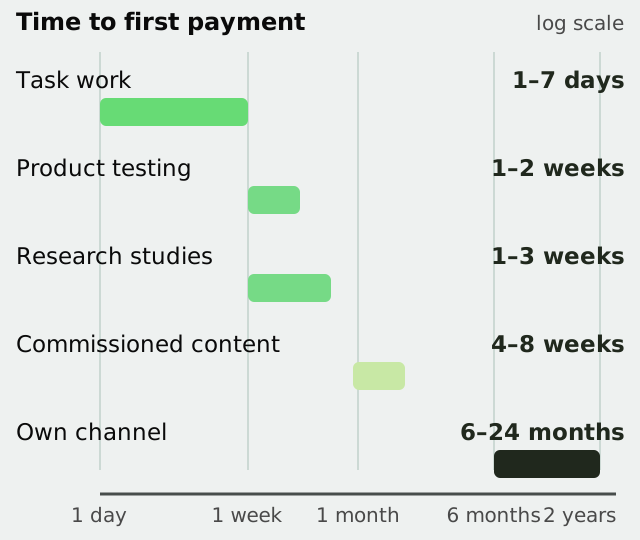
Applying starts on day seven. The first booking usually lands somewhere between week four and week eight, which is the part of the timeline nobody controls.
The kit, and what not to buy
The equipment question absorbs an enormous amount of energy that would be better spent filming. The honest list is short.
Buy, in this order:
- A clip-on microphone, around $20 to $50, if you speak on camera. Bad audio gets a clip rejected. Mediocre video does not. This is the highest-return purchase by a wide margin.
- A phone tripod with a flexible arm, around $15. Handheld footage looks unsteady in a way that reads as amateur rather than authentic.
- One soft light, around $40 to $80, only if your available filming time is after dark. Daylight through a window is better and costs nothing.
The thing worth investing in instead is a corner of your home that looks lived in and gets good light at a predictable hour. That is your set. Knowing that between 10am and 1pm the light by one particular window is reliable removes the largest recurring obstacle to shooting.
Faceless UGC, if you do not want to be on camera
A significant share of paid briefs never require your face. Hands holding the product, the product on a surface, a screen recording, with your voice over the top. Some briefs do not even want a voice, just clean footage the brand will caption themselves.
This is worth knowing for two reasons. It widens the work available to anyone uncomfortable on camera, and it is often easier to film well, because there is no performance to get right and no need to look presentable.
Where faceless work is common
Kitchen and home goods, tech accessories, cleaning products, apps and software, stationery, and anything where the interesting part is the product doing something.
Where it is rare
Skincare, beauty, fitness and clothing, where the buyer is judging the effect on a person.
If you go this route, include at least one faceless clip and one voiceover clip in your portfolio, and say plainly on the page that you work faceless. Brands filtering for it will find you faster.
Pricing your first bookings
The number that wins a first booking and the number you should settle at are different, and conflating them is the most common early mistake.
For a single short-form video with organic usage only, $75 to $100 is the honest floor for competent work. Going below that to win a first credit is defensible and plenty of creators do it. What causes problems is staying there, because a rate is sticky with any client who books you twice, and renegotiating upward with an existing client is harder than opening higher with a new one.
Three things justify charging more, and they are worth learning early. Rates broken down by usage has the full picture.
Usage rights. Organic posting on the brand's own channel is the cheapest licence. Paid advertising is worth two to three times that, because the clip becomes a revenue-generating asset rather than a post. Perpetual worldwide rights should cost multiples. When a brief does not state the licence, ask before you film rather than after.
Variants. Five hooks on one setup is one afternoon for you and five testable assets for them. Price it as a bundle at a discount per clip and you earn more per hour than five separate bookings would pay.
Turnaround. A guaranteed 48-hour delivery is worth a premium to anyone running a campaign to a launch date, and it costs you nothing except saying no when you are already booked.
What not to price on: your follower count, how long the filming took, or what the product retails for. None of those are what is being bought.
Handling the first brief without losing the client
The first delivery decides whether there is a second. A few habits carry most of the weight.
Confirm the specifics in writing before filming. Length, orientation, whether you speak, whether your face appears, what must be visible, the deadline, and the usage licence. Five lines in an email. Most disputes trace back to something both sides assumed.
Film more than you need. Two or three takes of the hook, plus a few seconds of cutaway footage of the product on its own. Cutaways cost nothing and save the brand an edit, which is exactly the kind of thing that gets you rebooked.
Deliver in the format asked for. If the brief says raw files, do not send an edit. If it says under 30 seconds, check the duration before exporting.
Send it early. A day ahead of the deadline reads as professional in a way that no amount of production quality does.
Accept the first round of notes without argument. You get to have an opinion once you have a relationship. On booking one, do the revision.
Tax and admin, briefly
Nobody wants to read this part and skipping it causes real problems in month nine.
You do not need a company to start. Sole trader or the local equivalent covers it, and registering is usually free or close to it. A registered company becomes worth the paperwork when clients start requiring invoices from a legal entity, when liability matters because you are making claims about products, or when the tax treatment of a company beats personal income at your level. None of those apply to your first five bookings.
Two habits worth forming early. Set aside a fixed share of every payment for tax rather than discovering the bill at year end. And send a numbered invoice even when a platform pays you automatically, because a year of invoices is what makes the accounting straightforward.
If you work with brands in another country, keep the payment records in the currency you were actually paid in as well as your own. Conversion rates on the day matter for the return.
Common reasons a beginner stalls
- No category. A portfolio spread across skincare, tech, pets and fitness reads as somebody trying things rather than somebody who does one thing well.
- Applying to too few briefs. Ten applications is not a test of the market. Thirty in one category is.
- Waiting for free product. Nobody ships product to a creator with no portfolio. Use what you own.
- Building the portfolio and not sending it. The most common failure of all. Four good clips sitting in a folder earn nothing.
- Chasing the lowest-rate briefs. A $20 unboxing draws a hundred applicants. A $150 scripted brief in a specific country draws eight.
- Treating rejection as a verdict. It is almost always a mismatch on a stated requirement, and the fix is reading the brief more carefully next time.
A note on speed
Nothing in this plan requires waiting for anyone. Every step is something you can do with what you already own, on your own schedule, without permission from a brand or a platform. That is unusual for freelance work and it is the main reason the category is worth entering at all.
The people who take six months to start are not blocked by equipment or by talent. They are waiting for a signal that never arrives.
What to expect in month one
Rejections, mostly. Everyone gets them, including creators who now bill several thousand a month. The ones who make this work applied to thirty briefs rather than three, and treated each rejection as a brief they had misread rather than a judgement on their filming.
Expect the first booking somewhere between week four and week eight if you are applying consistently. Expect it to pay less than you would like. Expect the second one to arrive faster than the first, because a real credit changes how the next application reads.
Once two paid clips exist, swap them into the portfolio in place of two spec pieces and raise your rate. Then repeat that until the rate stops clearing, which is the only reliable way to find out what your work is worth. If you want the wider picture of where the paid work sits, the routes into UGC jobs covers marketplaces, direct outreach and agencies side by side.
If you came to this from a platform offering you the title rather than from the work, what a digital creator is and what the label does not give you is the shorter answer to that question.